
7 proven techniques to beat performance anxiety in sport

Performance anxiety in sport is far more common than most athletes admit out loud. Whether you're stepping onto the competition floor, gripping the bar for your opening lift, or waiting for the whistle at your weekend league match - nerves have a way of showing up just when the stakes feel highest.
But here’s the truth: feeling anxious doesn’t mean you’re unprepared.
It doesn’t mean you’re weak.
And it definitely doesn’t mean you’re not capable.
Anxiety is a normal physiological response to something that matters deeply to you. In fact, many elite athletes- CrossFitters, lifters, endurance racers, and team-sport players alike - experience nerves before competition. What separates those who crumble from those who rise isn’t the absence of anxiety… it’s how they work with it.
This guide will walk you through seven proven, practical, athlete-friendly techniques to ground your body, steady your mind, and perform with confidence when it counts.
If you’re ready to feel more in control on competition day, let’s go.
Table of contents
Technique 2: break the anxiety cycle with pre-performance routines
Technique 3: reframe unhelpful thoughts using “Name, Normalise, Nudge”
Technique 4: reduce overwhelm through controlled visualisation
Technique 6: turn nerves into fuel with the challenge mindset
Technique 7: use competition-day boundaries to protect your focus
What is performance anxiety in sport?
Performance anxiety is a mental and physical stress response triggered by competition pressure. Symptoms can include:
Racing heart
Shaky muscles
Difficulty concentrating
Overthinking
Feeling disconnected or “not ready”
Sudden loss of confidence
These reactions are deeply human - not signs that you lack talent. They are your nervous system trying (a little too hard) to help you.
And the good news? With the right tools, you can teach your body and brain to respond differently.
Why athletes experience nerves before competition
Competition combines three powerful anxiety triggers:
Uncertainty (you don’t know what will happen)
Evaluation (people are watching or judging)
Meaning (you care about the outcome)
CrossFit athletes feel it before a max snatch attempt.
Weightlifters feel it waiting for the referee’s signal.
Runners feel it on the start line.
Team players feel it during warm-up.
The nerves come because the performance matters, which is exactly why learning to manage them can transform the experience.
Technique 1: ground your body with box breathing
The fastest way to calm your nervous system in under sixty seconds.
Overview
Before competition, the body often takes over. Your breath gets shallow, your shoulders tense, and your mind interprets these sensations as danger. Box breathing is a simple but powerful tool to calm the fight-or-flight response.
Why it works
It activates the parasympathetic nervous system, the one responsible for calm, clarity, and steady control.
How to do it
Inhale for 4 seconds
Hold for 4 seconds
Exhale for 4 seconds
Hold for 4 seconds
Repeat for 2–3 cycles
Use this during warm-ups, in the car, or even standing behind the platform before a lift.
Technique 2: break the anxiety cycle with pre-performance routines
A familiar sequence reduces uncertainty and builds a sense of readiness.
Overview
A competition-day routine - even a simple 3–5 step sequence - gives your body and mind something predictable to rely on when everything else feels uncertain.
Why it works
Routines anchor your attention in the present, reducing the spiral of “what ifs”.
What to include
Light movement or mobility
A consistent warm-up structure
Mental cues (“strong legs”, “trust your training”)
A confidence anchor (music, a phrase, a small ritual)
This doesn’t need to be dramatic - even wiping your hands on your shorts the same way before a lift can act as a grounding cue.
Technique 3: reframe unhelpful thoughts using “name, normalise, nudge”
A simple mindset technique for interrupting spirals before they escalate.
Overview
Negative thoughts before competing? Completely normal. What matters is how you respond to them.
The “Name, Normalise, Nudge” technique helps athletes recognise and redirect anxious thinking.
How to use it
1. Name it
“This is just performance anxiety speaking.”
“I’m having the thought that I might miss my first lift.”
2. Normalise it
“These thoughts show up for lots of athletes.”
“This is my body trying to prepare me.”
3. Nudge it
Shift to a cue-based thought:
“Strong off the floor.”
“Fast elbows.”
“One lift at a time.”
Why it works
It interrupts the brain’s catastrophising loop, allowing space for performance-cue thoughts instead.
Technique 4: reduce overwhelm through controlled visualisation
Mentally rehearsing key moments can reduce fear and strengthen confidence.
Overview
Visualisation allows you to experience the event ahead of time in a low-pressure environment.
Imagine the feeling of locking out a confident jerk or nailing your pacing in a CrossFit-style workout.
Steps for effective visualisation
Picture yourself in the actual environment
Walk through the warm-up
Imagine executing your movement cues
See yourself responding calmly to nerves
End the visual with a successful outcome
Why it works
Your brain builds neural familiarity, meaning the real event feels less threatening because you’ve “been there” before.

Technique 5: build confidence through “micro-wins”
Small, intentional successes compound into powerful self-belief.
Overview
Confidence isn’t built in a single moment; it comes from stacking micro-wins over time.
On competition day, micro-wins might look like:
Completing your warm-up on time
Moving well in early lifts
Staying focused on your lane
Responding calmly to a mistake
Executing your cues consistently
Why it works
Micro-wins remind you that you are capable, even when your brain tells you otherwise.
How to implement
Write down 3–5 potential micro-wins before the event.
Tick them off as you go.
Let the list build momentum.
Technique 6: turn nerves into fuel with the challenge mindset
Shift your relationship with anxiety rather than trying to eliminate it.
Overview
Many athletes try to “get rid of” nerves, which ironically… makes them stronger.
The challenge mindset reframes anxiety as energy and readiness.
How to shift into challenge mode
Instead of “I feel anxious,” try:
“My body is preparing me to perform.”Instead of “What if I fail?” shift to:
“Let’s see what I can do today.”Instead of resisting nerves, try:
“This feeling means the performance matters.”
Why it works
It stops the body’s stress response from being interpreted as danger, allowing you to perform with more freedom and less internal friction.

Technique 7: use competition-day boundaries to protect your focus
Managing your environment prevents avoidable spikes in anxiety.
Overview
An often overlooked part of sport anxiety management is setting boundaries around your competition environment.
Examples:
Limiting conversation with other athletes
Wearing headphones to reduce sensory overload
Avoiding social media that morning
Creating a small physical “zone” in warm-up
Not over-analysing your heat or lane assignment
Why it works
Boundaries reduce external noise so your energy can remain steady.
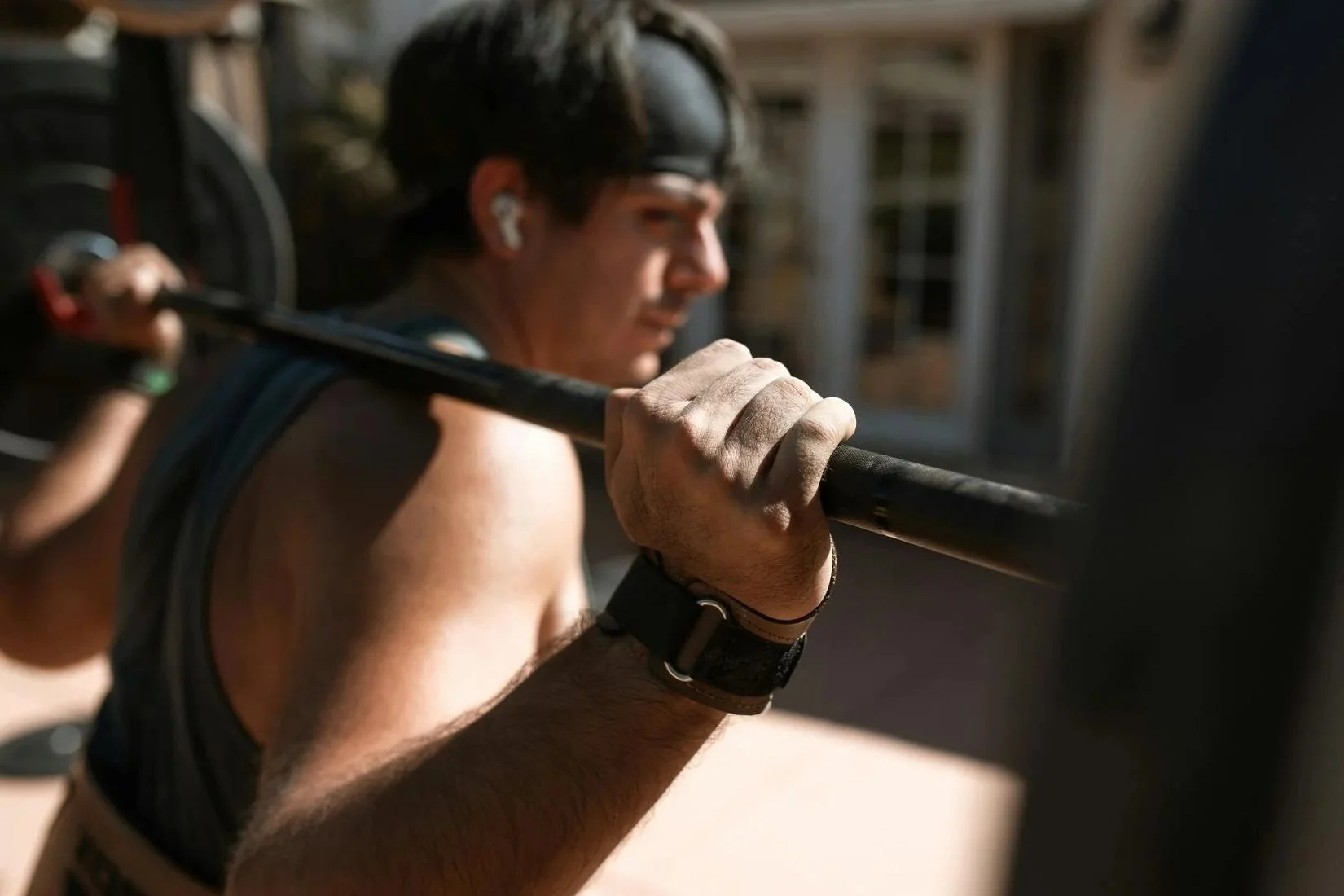
Many lifters and CrossFit athletes use headphones or sit facing away from the main area to maintain calm. It’s a simple but powerful adjustment.
Conclusion
Performance anxiety is something nearly every athlete experiences, even the most accomplished.
Your nerves aren’t a sign you’re incapable.
They’re a sign you care.
With the techniques in this guide, grounding your breath, creating a routine, reframing thoughts, using visualisation, building micro-wins, adopting a challenge mindset, and setting healthy boundaries, you can approach competition day with confidence, clarity, and control.
Ready to feel calmer, more confident, and in control on competition day?
If you want support applying these tools consistently, or you’d like to explore deeper mindset coaching tailored to your sport, my Athlete Mindset Coaching helps athletes overcome performance anxiety, build mental resilience, and perform at their best when it matters.
If you're ready to change the way you compete - book a free consultation today.
Performance anxiety FAQs
-
It’s a physical and psychological stress response triggered by competitive pressure. It’s common, manageable, and not a reflection of your ability.
-
A mix of mental skills training, breathing techniques, cognitive reframing, structured routines, boundary-setting, and supportive coaching.
-
Yes. You can learn to reduce it, manage it, and even work with it. Many athletes go from overwhelmed to confident through mindset training.
-
Completely. Most athletes experience nerves because they care about their performance.
-
Yes. Research shows that mental rehearsal strengthens neural pathways and reduces fear of uncertainty.
-
In the right amounts, yes. When reframed with a challenge mindset, nerves can enhance focus, alertness, and energy.